Mullein shows up in nearly every respiratory formula on the market, almost always with a confident sentence and no reference attached. Here is the version with the references, including the ones that do not exist.
The plant itself
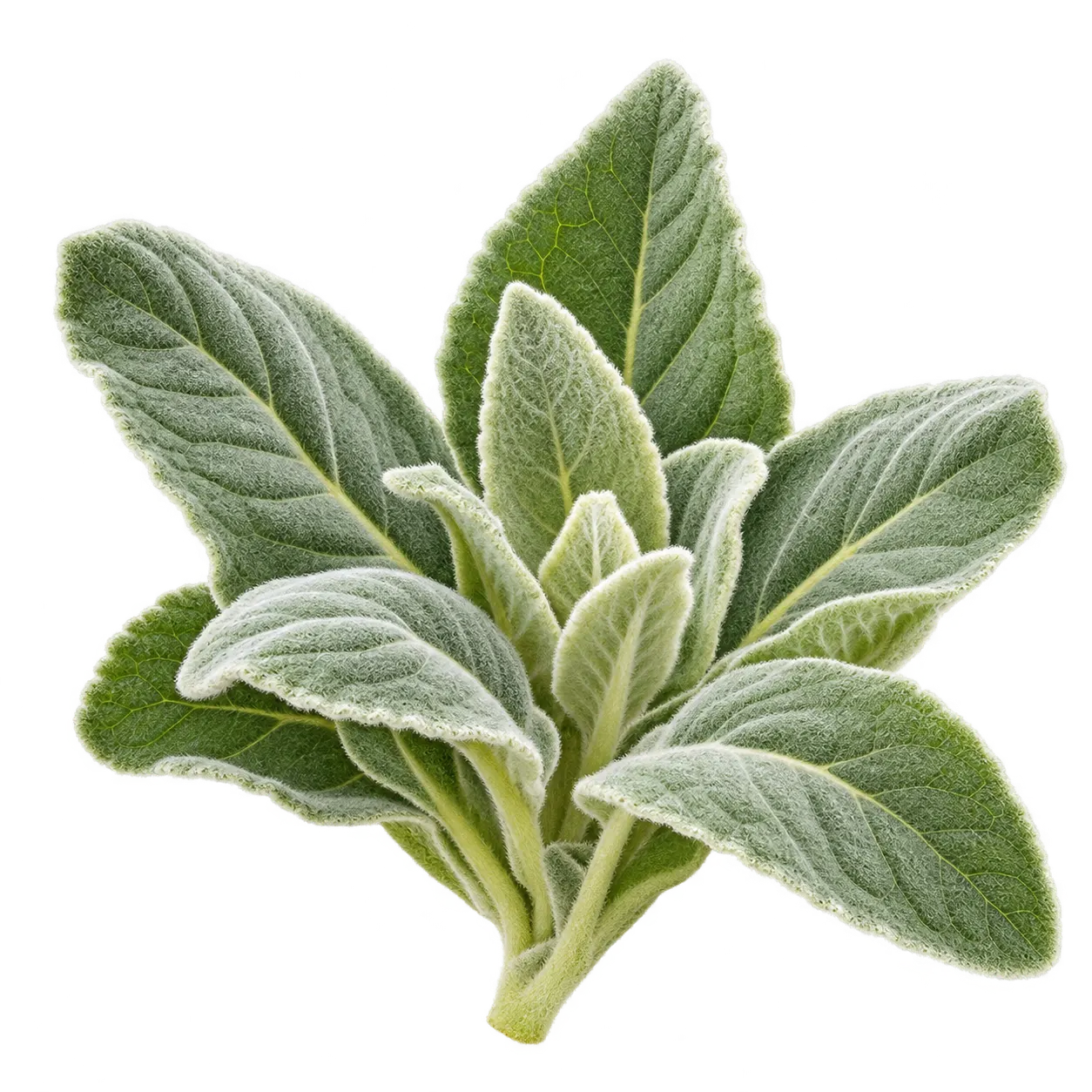
Verbascum thapsus: a biennial that grows tall and sends up a spike of yellow flowers, its leaves covered in fine pale felt. It colonises verges, railway sidings and disturbed ground across Europe, Asia and North Africa, and was carried to North America early enough to have naturalised there too. Entirely ordinary to look at, and used for an extraordinarily long time.
Why the history is worth a second look
Herbal traditions in Europe, in Turkey and among several Native American peoples all landed on mullein for troubles of the chest and throat. They did so without contact and without a shared text to copy from.
Independent convergence of that kind is a genuine signal — it suggests somebody, repeatedly, noticed something. It is also not proof, and the history of medicine is littered with practices that were near-universal and entirely useless. Hold both thoughts at once.
What benchwork finds
Analysis returns a recognisable set: saponins, the phenylethanoid glycoside verbascoside, flavonoids with quercetin among them, and iridoid glycosides of which aucubin is best known. Put several of these in front of cells or laboratory animals and they behave as antioxidants or dampen inflammatory signalling.
Saponins carry the weight of mullein's old billing as an expectorant, on the reasoning that saponins can thin secretions. At least that is a named mechanism rather than an atmosphere.
How to read a seller
Any page describing mullein as "clinically proven" for lungs should be asked, politely, which trial. The question has no answer. It separates companies prepared to say what they do not know from companies relying on nobody asking.
The defensible description is short: long-used, chemically interesting, untested in people. A label unwilling to put that in writing is making a decision about you.
Getting it into you
Tea is the traditional route and demands real care with straining, because those fine leaf hairs irritate the throat if any survive. Tinctures and capsules sidestep the problem. A liquid extract delivered by pump sidesteps it too, with the added benefit of a measured amount that tea cannot offer.
One method is worth refusing regardless of pedigree: smoking it. Whatever the leaf might contribute, combustion products arrive alongside and undo the point of the exercise.
Tolerance and cautions
Well tolerated by healthy adults as a rule, with allergic reaction the documented risk as for any plant material. Evidence during pregnancy and breastfeeding is sparse enough that avoidance is the standing advice in both. Anyone on regular medication can settle the interaction question with a pharmacist in less time than reading this paragraph took.
Questions people also ask
What are the benefits of mullein?
Traditionally, mullein benefits were described in terms of soothing an irritated airway and easing a dry cough, and three separate herbal traditions arrived at that use independently. Human clinical evidence remains thin, which is worth saying plainly rather than burying.
Is mullein tea better than a spray?
Mullein tea has to be strained, because the leaf hairs irritate, and it has to be brewed, which most people will not keep up. A spray removes both problems. Neither format has human trial data behind it.
Three Botanicals, Once a Day
Packages from $49 a bottle, every one with the same 60-day guarantee.
See Package PricingThese statements have not been evaluated by the Food and Drug Administration. BreathiZen® is a dietary supplement and is not intended to diagnose, treat, cure or prevent any disease. Nothing here is medical advice. Prices, shipping and guarantee terms are set by the official retailer and confirmed at checkout. Speak to your doctor before starting any supplement.
← Back to all articles