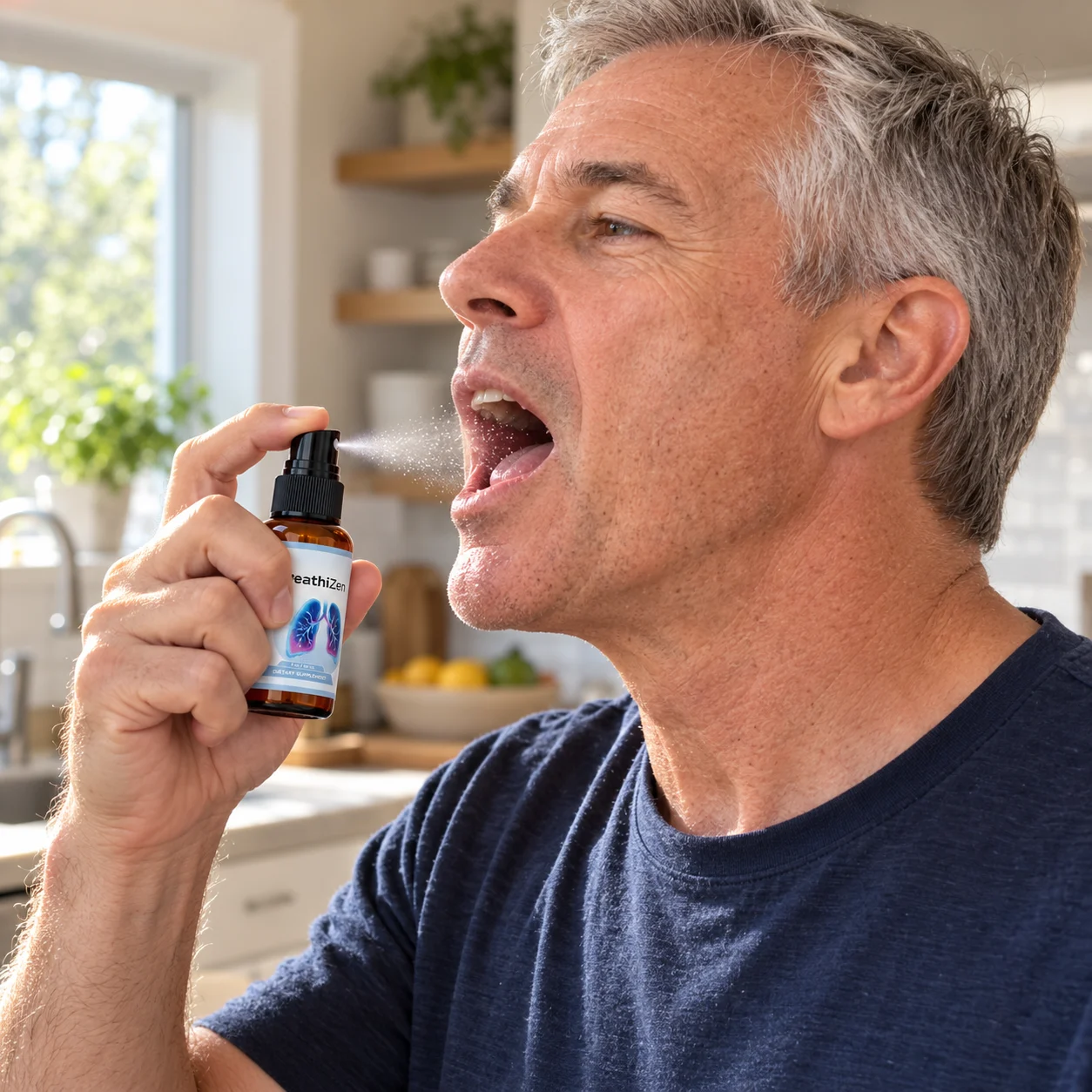
The cold ended a fortnight ago. Everything else is back to normal. The cough is still here, and it has become the part of the illness you remember.
What is actually happening
Respiratory infections damage the lining of the airway, cilia included. Those cells repair themselves, but repair takes time — often considerably longer than the infection itself. While the escalator is running below capacity, coughing is doing work that clearance would normally handle quietly.
The cough reflex also becomes temporarily more sensitive after an infection, so a smaller trigger sets it off than would have before.
Why it is worse at night
Lying flat slows clearance, secretions pool, and a bedroom is usually the driest air you breathe all day. That combination is why a cough that was manageable at 4pm is the reason you are awake at 1am.
Slightly propping the head of the bed, getting the bedroom humidity into range, and having water within reach address all three.
What helps while you wait
- Fluid. Supports the repair and keeps the watery layer where it needs to be.
- Humidity between 30 and 50 per cent, particularly overnight.
- Honey. One of the few remedies with reasonable trial support for cough, and better than most over-the-counter options in several comparisons. Never for infants under one year.
- Avoiding irritants. Smoke, strong fragrances, cold dry air.
- Patience, which is the hard one. The urge to try something new every few days makes it impossible to tell what is working.
What does not help
Antibiotics, when the cause was viral — which it usually was. Cough suppressants have a thinner evidence base than their shelf space implies. And repeatedly clearing your throat at it tends to prolong the irritation rather than relieve it.
When it needs a doctor
This is the part worth reading twice. See someone if the cough has lasted more than three weeks and is not steadily improving, if you are bringing up blood, if you have fever, night sweats or unexplained weight loss, if you are short of breath or wheezing, if there is chest pain, or if you smoke or used to and the pattern of your cough has changed.
A lingering post-viral cough is ordinary. A cough that is not improving is a symptom, and symptoms get assessed rather than waited out.
Questions people also ask
Why do I have a cough that won't go away?
A persistent cough after a cold is usually damaged cilia regrowing, and that takes weeks. The infection has gone; the clearance system is still rebuilding, and the cough is covering for it in the meantime.
How long is too long for a persistent cough?
Three weeks is the usual line for getting it looked at, and eight weeks makes it chronic by definition. A cough that won't go away past those marks deserves a diagnosis rather than a supplement.
Three Botanicals, Once a Day
Packages from $49 a bottle, every one with the same 60-day guarantee.
See Package PricingThese statements have not been evaluated by the Food and Drug Administration. BreathiZen® is a dietary supplement and is not intended to diagnose, treat, cure or prevent any disease. Nothing here is medical advice. Prices, shipping and guarantee terms are set by the official retailer and confirmed at checkout. Speak to your doctor before starting any supplement.
← Back to all articles